WORK, REST AND THE CHALLENGE OF LIVING AT HUMAN SCALE
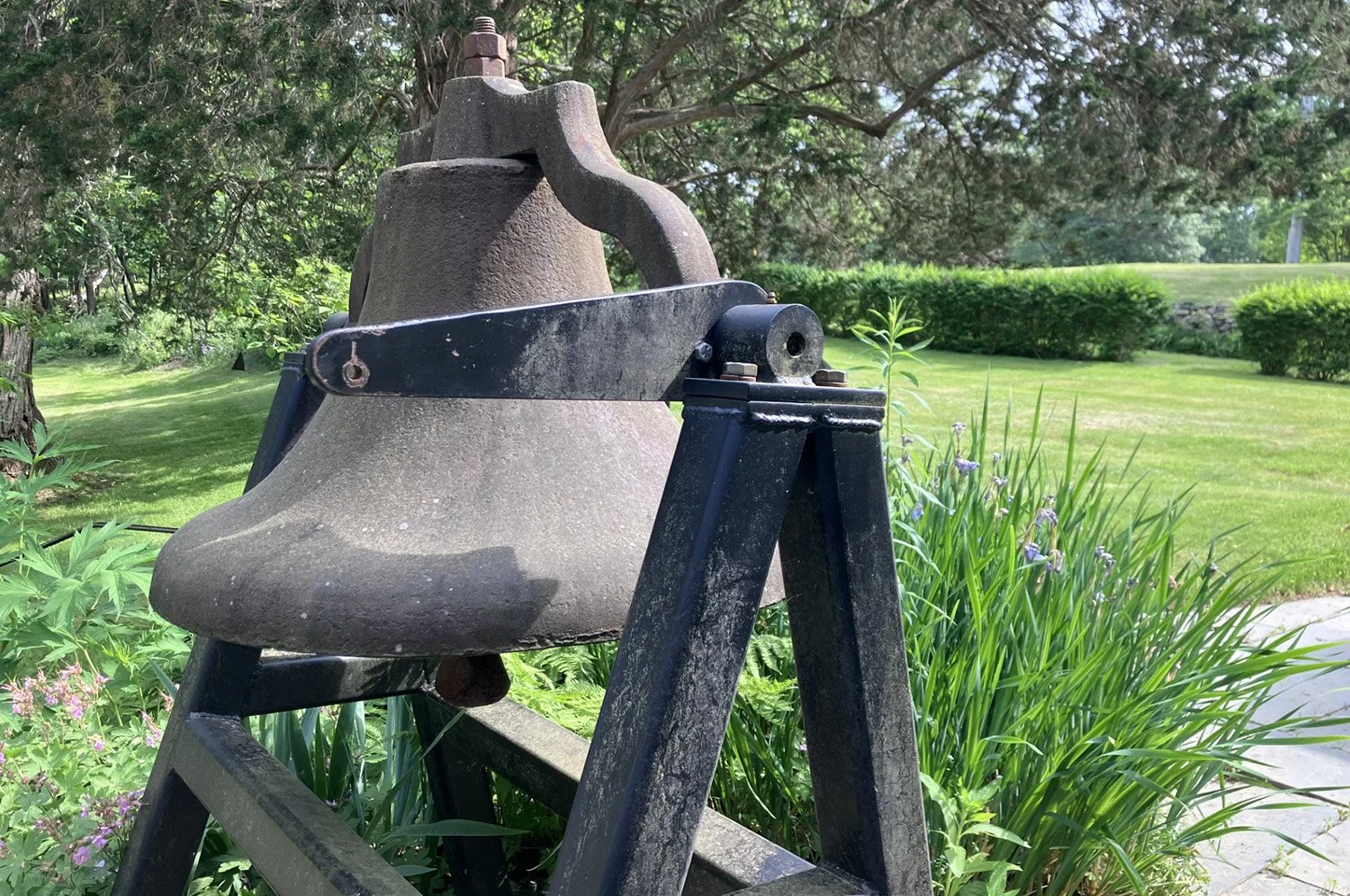
To enter a monastery is to enter a world governed by bells.
Bells call us to prayer, welcome guests to meals, initiate worship, and send us forth from times of fellowship. For those joining us on retreat, bells invite them to a short period when they might experience a different relationship with time by letting these auditory signals replace the glance down at the wristwatch or the setting and silencing of smartphone alarms. “Listening to a bell,” writes French social historian Alain Corbin in his Village Bells: Sound and Meaning in the 19th-Century French Countryside (1994; trans. 1998), “conjures up a space that is by its nature slow, prone to conserve what lies within it, and redolent of a world in which walking is the chief mode of locomotion” (p. 96).
Living life at human scale is an invitation that monasteries aim to offer, and that is so sadly lacking in much of our world.
Even here, within the monastery enclosure, this is an invitation that takes work to accept.
The postulancy—the first stage of testing for a new member of a religious community—is highly regulated and, for us, highly scheduled. Every hour is claimed for prayer, work, rest, study, and community life. It is orderly and balanced and predictable.
In other words, it is an absolute dream for those of us who value—as the world so highly values—achievement and accomplishment and productivity.
This certainly has characterized me and my own time of testing as a postulant. An hour set aside for work was a challenge to check as many items off my list in that hour as possible. Spare, unclaimed minutes were opportunities to fit in answering one more email or get one more task done. Even periods of recreation were structured as I plugged away at a running training program.
Cutting into all of this were the bells, marking times of reorientation, a shift from work to worship, from prayer tocommunity time. The bells for me signaled points of transition in a life that was orderly and disciplined, but that had also become highly compartmentalized. I wasn’t aware of it at the time, but I was missing the point entirely.
Time is a finite resource, and like other finite resources—money, energy, numbers—is governed and regulated in the context of the religious life by the vow of poverty. “God will give us our poverty,” we read in our Society’s rule of life, and this has certainly been true for me in my relationship with the hours of the day.
Not, though, simply because there is too much to do and far too little time to do it. Not simply because there are too few hours in the day, and too few days in the week. Rather, because what I brought in with me, in my desire for accomplishment and productivity, and what I tried to impose during my postulancy, was not living life at a human scale. In trying to overcome the limitations of minutes and hours by trying to eke out the absolute most from every one of those minutes and hours, my own life was becoming increasingly impoverished. Our vow of poverty is not about depleting our humanity to make the most out of our limitations, but in allowing those very limitations to help us discover and cultivate what it means to be truly human.
We all hear so many voices around work saying the same thing: “more, more, more.” And for what purpose? To make more money? To keep up with others? To demonstrate my value? Or is the doing, the staying busy, an end in itself?
Perhaps you recognize this voice, and see named here some familiar motivations. That’s not a judgment: we all live in the world and are subject to its conditions. The religious life is as subject to these conditions as life outside the walls of a monastery. The difference is that we are called to live life against the grain, noticing and explicitly resisting these conditions, and, hopefully, providing hope that another way of living is not only desirable but possible.
I’m always struck that scripture locates our human vocation as workers in the context of our creation. Genesis tells us that “the Lord God took the man and put him in the garden of Eden to till it and keep it” (2:15), and we hear this echoed in the great psalm of creation: “Man goes forth to his work and to his labor until the evening” (104:24). But the Fall inflected our work, transforming tilling and keeping into painstaking toil. The second Person of the Trinity’s coming to us as Jesus Christ, emptying and humbling himself by taking on our humanity (Philippians 2:7), helps us to rediscover what it means for God to create us as workers in God’s image and likeness.
In this respect, Jesus’ life can offer us two interventions in our contemporary world: the source of our dignity and the quality of our rest.
Many of us will have been formed to work for success. Rewards for good grades (or punishments for bad), college prospects conditioned on test scores, bonuses for exemplary work, medals for hard training. Our world privileges success and punishes failure, and breaking out of that pattern is difficult, if not impossible. We all live in the world, and these are its conditions.
But we needn’t let ourselves be defined by them. What we do, good or bad, is not who we are. If I succeed, that doesn’t mean that who I am is a success; just as failure doesn’t mean that I am a failure. This false equivalency is challenging to let go of, but we are called to do so, both as followers of Christ and as human beings.
Our createdness in the image and likeness of God and our adoption as God’s beloved children are themselves primary and the source of our identity and dignity. Jesus’ public ministry began after his baptism and the disclosure of his identity as God’s son, and who he was was always the starting point for his earthly labor. So too for us. Our work—however great or small, public or hidden—derives its dignity from our own being, and not vice versa. Work doesn’t dignify us; we dignify work. Recognizing this directionality is crucial to making our relationship with work human scaled. It’s not about setting arbitrary limits—I’ll work these hours, or no more than this amount—but about putting work within the context of our fundamental relationship in and with God.
Part of this relationship is as fellow workers with God. But part of it is as fellow resters. “So God blessed the seventh day and hallowed it, because on it God rested from all the work that he had done in creation” (Genesis 2:3). God didn’t have a leftover day; rest wasn’t what happened if there was time but was continuous with and integral to God’s own work in creation. Jesus understood this as well, incorporating time alone with God in the wilderness into his own rhythms, and finding rest and solace in the company of his friends. Rest wasn’t something he only sought when his body needed it, but something he practiced as an expression of what it means fully to be a human being, created in the image and likeness of God.
In my own experience, this has meant going beyond simply setting aside time that is not work to ensuring that that time is genuinely open and responsive. In work, we live out who we are in the world. In rest, we discover whose we are. How can time of rest be time of availability to your creaturely needs as well as to the ongoing voice of God speaking to you? How can times of exercise be not just items to check off your list outside of work but also opportunities for recollection and thanksgiving for the wonder and miracle of your physical creation? How can reading fiction be not just a period of distraction and entertainment but a training of your imaginative faculty, enlarging another place where God may speak to you? How can times with friends be not just occasions for socializing, but for encounter with Christ who dwells in them? And can sleep be not just a chance to recharge but, as for Jacob and Joseph and so many other figures from scripture, an arena for God’s self-disclosure in dreams? This partakes of the quality of “holy leisure” Joan Chittister OSB describes in her classic Wisdom Distilled from the Daily: Living the Rule of St. Benedict Today (1991): “leisure that makes the human more human by engaging the heart and broadening the vision and deepening the insight and stretching the soul” (p. 101).
Making the human more human. When our bell rings out now, I hope that its sound finds me engaged in this great project—trying to become more human, more the human, uniquely giftedandlimited, God created me to be. It is, and I am, a work in progress, which is perhaps all that we can hope for in this life: an ever-morebecomingas Christ dwelling in us transforms us and invites us further on into the divine life. As our founder, Richard Meux Benson, wrote: “Every action by which his strength has been developed in us has been a deifying action, gathering us up into the participation of the divine nature, which is the blessed purpose of his Incarnation, the fruit of his mediatorial love, the epiphany of his triumphant power.” Whatever our frustrations and limitations and failings, we have the unfailing hope that God’s action in and through us makes the poverty of our humanity richer than we can possibly imagine.